Ajloun travel guide: forest, castle, and where to stay
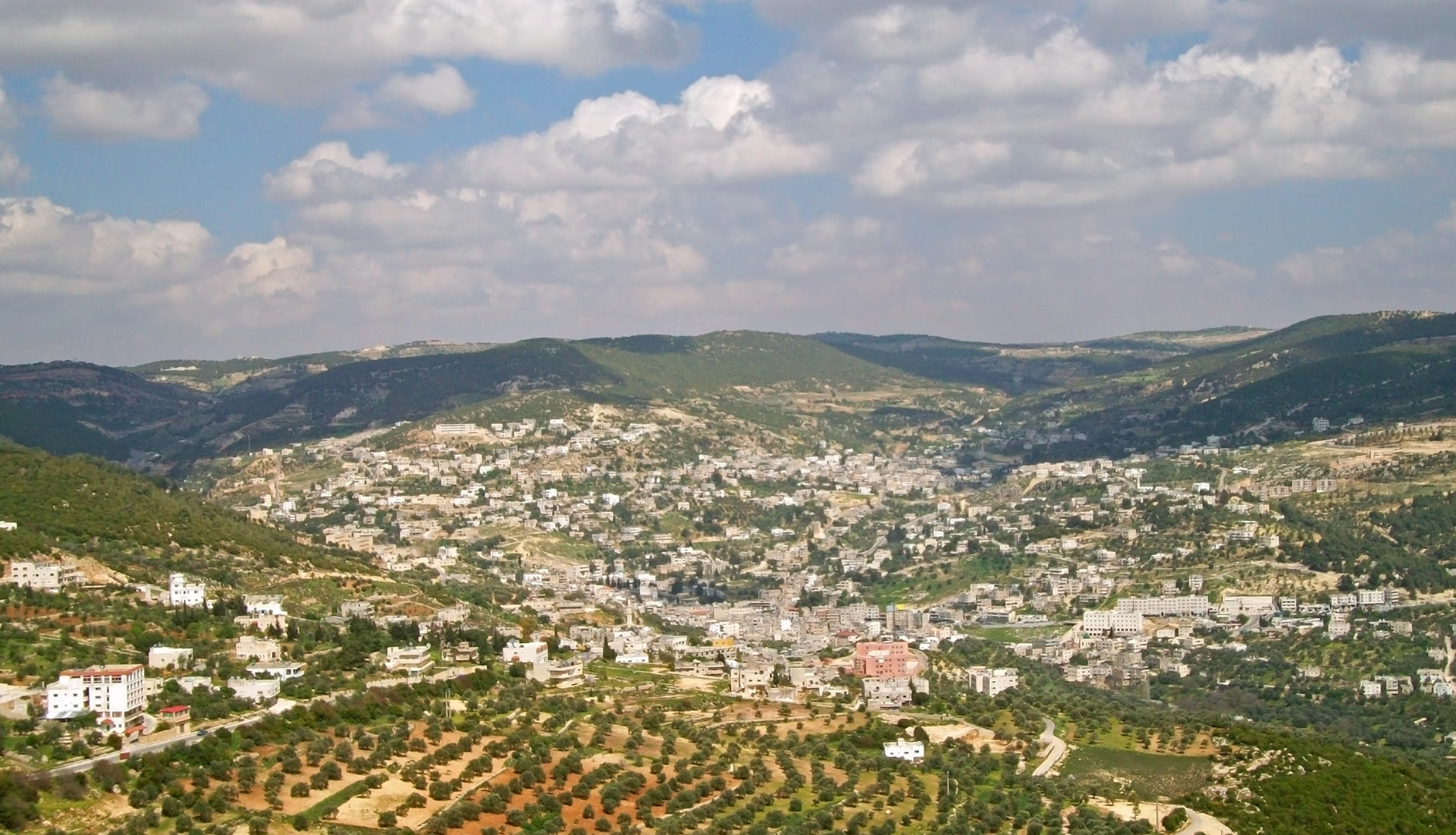
Ajloun is a forested mountain area in northern Jordan, about 76 km (a 1.5-hour drive) northwest of Amman via Jerash. Its peaks reach around 1,268 m, so the air stays cool in summer while the rest of the country bakes. This is one of the greenest parts of Jordan, the opposite of the desert most people picture. In a single day you can walk a protected forest, tour a castle older than eight centuries, and sleep in a chalet under the trees.
Ajloun Forest Reserve
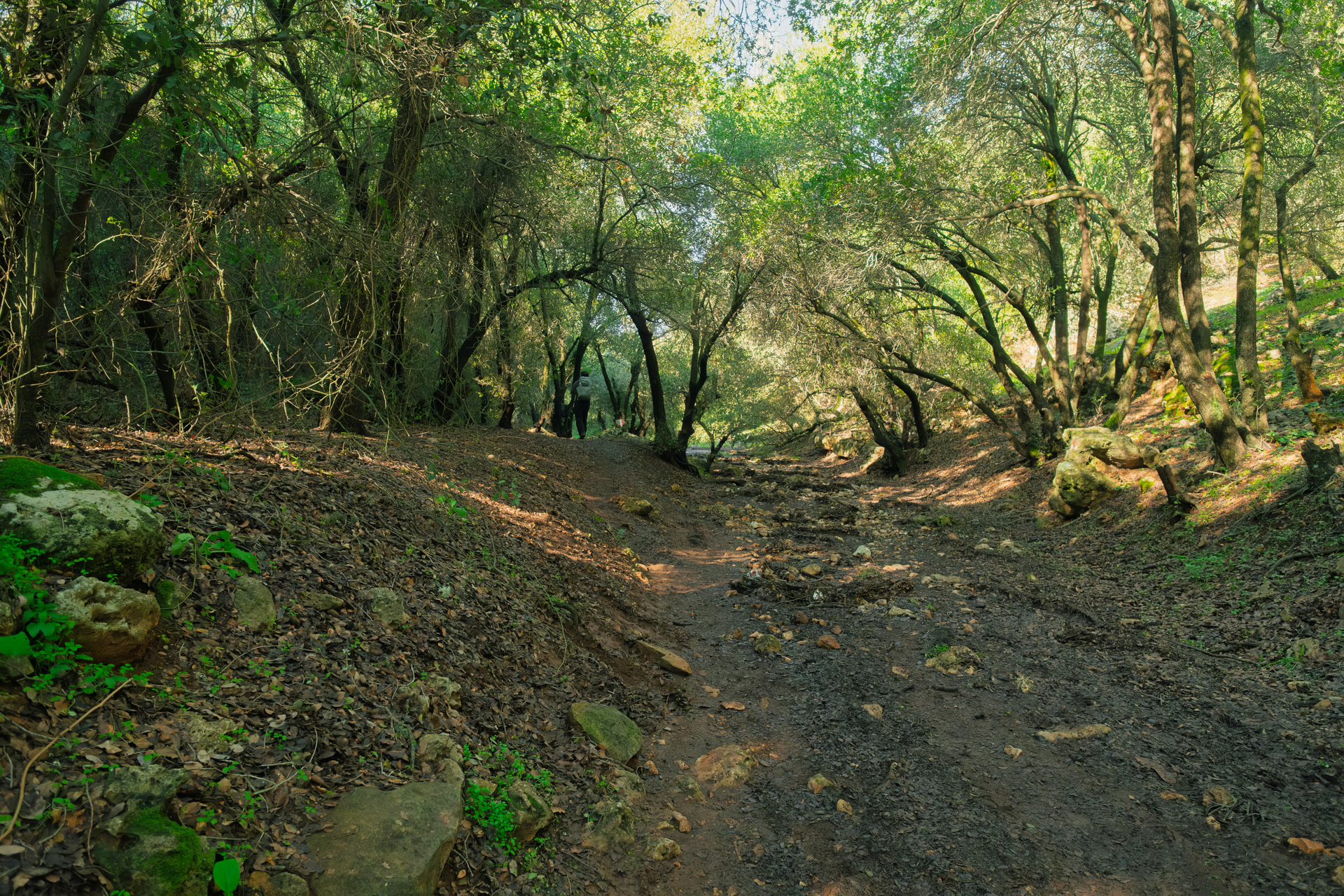
The reserve is run by the Royal Society for the Conservation of Nature and covers about 13 square kilometres of evergreen oak woodland, mixed with pistachio, carob, and wild strawberry trees. Roe deer, once extinct in the Jordanian wild, were reintroduced here.
The trails come in different lengths. The Roe Deer Trail is short and easy (2 km, about an hour): it climbs to a hilltop and loops back, and fills with wildflowers in spring. The Soap House Trail is longer (7 km, about 3 hours), passing the Eagle Viewpoint at 1,100 m and ending at a soap house where village women make olive-oil soap by hand. You can watch them work and buy a bar. If you want a long walk, the Prophet's Trail continues to Tell Mar Elias, a Byzantine site with mosaic floors and one of the oldest Christian pilgrimage spots in Jordan.
The reserve doubles as a social project: the money from visits and products goes back to Ajloun's own villages. The RSCN also runs a few wooden cabins inside the forest, but there aren't many, so book early if you want one.
Qal'at ar-Rabad (Ajloun Castle)
Ajloun Castle, originally called Qal'at ar-Rabad, was built in 1184 CE on the orders of Saladin by his commander Izz al-Din Usama. It was meant to guard the local iron mines, watch over the three northern valleys, and hold off Crusader raids; the Mamluks later enlarged it in the 13th century.
The castle sits on a hilltop overlooking the Jordan Valley, and on a clear day you can see across to the hills of Palestine. Inside there's a small museum plus passages and towers you can explore in under an hour. Since the road there passes through Jerash, many visitors pair the two in one trip.
Best time to visit, and getting there
Summer is Ajloun's best season: when the heat sits heavy on Amman and the Jordan Valley, the forest stays shaded and several degrees cooler. Spring brings the wildflowers; autumn is quieter, with softer colours. Winter is genuinely cold, though — snow can fall on the peaks and temperatures drop below zero, so pack warm clothes and check the road before you set off. Getting there is simple: a paved road about 1.5 hours north of Amman.
Where to stay: chalets in Ajloun
Hotels are scarce in Ajloun, so most visitors stay in a rural chalet up in the hills. Before you book, check three practical things: a fireplace or solid heating for the cold nights, a road that stays passable in winter, and enough space for your group. Most important, make sure the photos are of the actual chalet — on YallaChalet we verify that before any listing goes live.
We gather Ajloun's chalets in one place so you can compare them easily. Browse the Ajloun area to see what's available and message the owner directly on WhatsApp, with no commission and no middleman. Still torn between the north and elsewhere? Our guide on the Dead Sea, Ajloun, or Aqaba compares the three on drive time, season, and price.
Common questions
- How far is Ajloun from Amman?
- About 76 km, a 1.5-hour drive north via Jerash.
- When is the best time to visit Ajloun?
- Summer to escape the heat, spring for the wildflowers. Winter is cold and it can snow.
- Is Ajloun worth an overnight stay?
- Yes. The reserve and the castle fill a full day, and a night in a chalet with a fireplace beats driving two hours each way in the same day.
- Is Ajloun good for families?
- Yes. The Roe Deer Trail is short and easy for kids, the castle is safe to wander, and most chalets are set up for families.