Inside Petra: what you actually see
Inside Petra is not one facade you photograph and leave. It is a full city cut into rock in southern Jordan: around 3,000 archaeological features have been recorded inside the site, about 800 of them known and catalogued monuments. The main trail runs 8 km from the visitor centre to Qasr al-Bint, passing the Djinn blocks, the Siq, the Treasury, the theatre, and the carved tombs, with a branch of roughly 800 steps up to the Monastery. At YallaChalet we gather the places to stay in Wadi Musa right by the gate, because in practice those numbers mean the visit needs an overnight.
What follows is the site monument by monument, in the order the trail meets them.
The main trail: 8 km from the visitor centre to Qasr al-Bint
Petra's main trail runs 8 km from the visitor centre to Qasr al-Bint, and the Siq is not where it starts. Before the mouth of the Siq you pass the Djinn blocks, the Obelisk Tomb, and an ancient Nabataean dam that diverts flood water away from the corridor. The inventory of monuments inside the site is published on the official Petra monuments page by the Petra Development authority, which is the reference for monument counts and trails.
The Djinn blocks are cube-shaped towers cut from the rock, standing alone before the Siq. The popular name comes from an old belief that jinn lived in them, but the archaeological reading today is that they are tombs and funerary monuments, and that is the Petra authority's own account.
The Siq and the Nabataean water channels
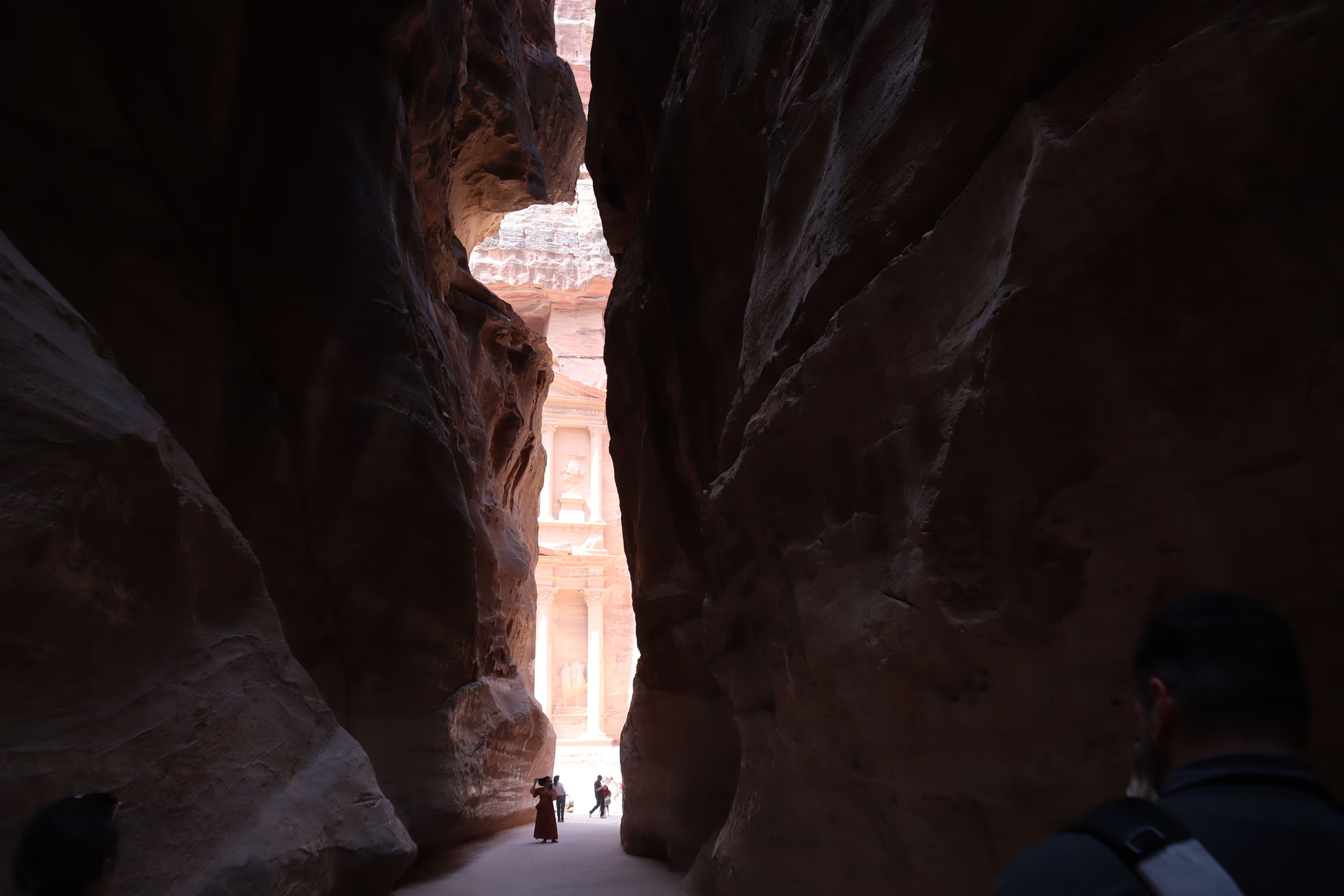
The Siq is a natural rock cleft running about 1.2 km (official sources give 1,250 m and more) between walls that rise hundreds of metres, and it is the last stretch before the Treasury. Water channels are cut along both of its walls for the length of the corridor, and they are the part most visitors walk straight past.
Those channels, together with the dams and the cisterns cut into rock, are why a city stood here at all. Petra sits in a place with scarce rain and sudden floods, and the Nabataeans solved both at once: they held winter water in cisterns and pushed the flood off the corridor so it could not scour the city away. The carved stone is what gets photographed; the water is what made the stone possible.
Inside the Treasury: three chambers and no treasure
Inside the Treasury are three rock-cut chambers — a central one roughly 12.5 m across and two flanking it — with graves cut into the floor for burials. The Treasury is a Nabataean royal tomb, and the facade standing about 40 m tall is all you see from outside, so the interior is far smaller than the front suggests.
There is no treasure in the Treasury and there never was. The name comes from a folk story about gold hidden in the stone urn at the top of the facade. The claim that circulates about a special Treasury entry fee running into hundreds of dinars is false too. The only official fare on this stretch is the horse or carriage from the visitor centre: 15 JOD one way, 25 JOD return. The rest of the charges are set out in Petra entry fees and tickets.
Petra's monuments beyond the Treasury
Past the Treasury the valley widens and the city itself begins: a theatre, tombs with enormous facades, a temple built of masonry, and a museum. All of these sit on the main trail and need no side climb.
The theatre
The theatre is cut entirely into rock in the Roman style and seats over 7,000. What separates it from the Roman theatres people know is that it was not built stone on stone; its tiers were cut out of the mountain row by row.
The Urn Tomb
The Urn Tomb, known locally as al-Mahkama, is a huge tomb facade standing on the main route opposite the theatre. Its size and its height above the valley floor make it the clearest facade in the city after the Treasury and the Monastery.
Qasr al-Bint
Qasr al-Bint is one of the very few structures in Petra built from laid masonry rather than carved into the mountain, and it served as the city's main temple. That is the interesting part: all of Petra was cut from rock, and this one was set stone on stone. It is also where the main trail ends, at the eighth kilometre.
The Petra Museum
The Petra Museum sits on the main trail near its end and displays finds from the site itself: statues, pottery, and architectural pieces. It adds about half an hour, and it explains what the carved rock outside cannot tell you on its own.
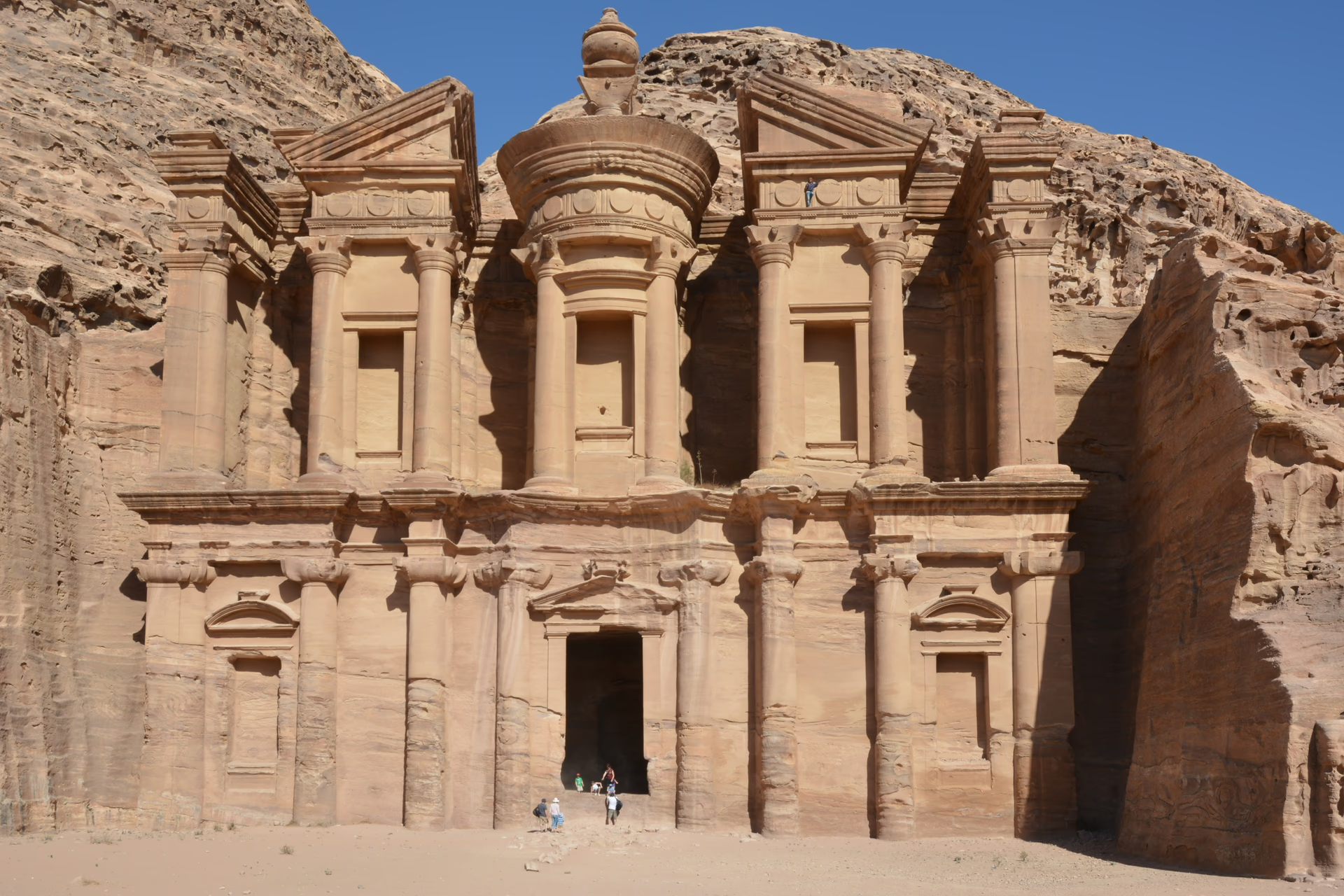
The Monastery: Petra's largest carved facade
The Monastery is the largest carved facade in Petra, larger than the Treasury itself, and it is reached by climbing roughly 800 steps cut into the rock. That climb is why it is quiet: many visitors reach the city centre and turn back, so the Monastery stays less crowded than the Treasury through most of the day.
On timing, allow two to three hours for the climb, the descent, and standing at the top, on top of whatever the main trail takes.
How much time inside Petra actually takes
The gate opens at 06:00 and closes at 18:00 in summer, and runs 06:30 to 17:00 in winter. Put the numbers side by side: 8 km of main trail one way, roughly 800 steps if you want the Monastery, a winter day an hour and a half shorter, and Amman 235 km away, about three hours in each direction.
Six hours of driving and a full day inside the site do not fit into one day. The honest answer is two days, and two days means sleeping in Wadi Musa. Browse places to stay in the Petra area and message the owner directly on WhatsApp, with no commission and no middleman. To pick the month, see the best time to visit Petra, and for the wider picture of the site, the drive, and where to stay, the Petra travel guide.
Common questions
- What is actually inside Petra?
- A whole Nabataean city, not a single facade. Around 3,000 archaeological features have been recorded inside the site, about 800 of them known monuments. The main ones are the Siq, the Treasury, the Djinn blocks, the rock-cut theatre seating over 7,000, the Urn Tomb, Qasr al-Bint, the Petra Museum, and the Monastery.
- Is there treasure inside the Treasury?
- No. The Treasury is a Nabataean royal tomb. Inside are three rock-cut chambers, the central one about 12.5 m across, with graves cut into the floor. The name comes from a folk story about gold hidden in the stone urn on the facade, and there is nothing to it.
- How many kilometres is the walk inside Petra?
- The main trail is 8 km from the visitor centre to Qasr al-Bint, one way. The climb to the Monastery adds roughly 800 rock-cut steps on top of that. Anyone who would rather not walk it all can take a horse or carriage from the visitor centre to the Treasury for 15 JOD one way, 25 JOD return.
- How many days do I need to see all of Petra?
- Two. The main trail alone is 8 km, the Monastery adds 800 steps, and the gate closes at 18:00 in summer and 17:00 in winter. A day trip from Amman means 470 km of driving in the same day, which leaves too little time for the site itself.