Petra, Wadi Rum or Aqaba: which one to pick
Pick Petra if the archaeological site itself is the reason for the trip, Wadi Rum if you want a night in the desert under a clear sky, and Aqaba if you want to actually swim and snorkel in the Red Sea. That is the fast sort between Petra, Wadi Rum and Aqaba, but it is not the whole answer: all three sit on one line through southern Jordan, with Wadi Rum in the middle of it, so most people asking the question can realistically fit two of them into one trip without doubling back.
The numbers in the YallaChalet directory show the same split from another angle: 67 camps and desert stays listed in Wadi Rum, 21 places in Aqaba, and only three in Petra (read from our database in July 2026). That gap is not an administrative detail. It is the clearest evidence that each of the three areas sells something entirely different from the other two.
Petra, Wadi Rum and Aqaba compared
The shortest drive from Amman is Petra: about 235 km, roughly three hours on the Desert Highway. Wadi Rum and Aqaba both run to about four hours, with Aqaba the farthest at around 330 km. But the drive is the least of what separates them; the real difference is what you sleep in and which season the place is good for.
| Petra | Wadi Rum | Aqaba | |
|---|---|---|---|
| Drive from Amman | ~235 km, 3 hours | ~4 hours | ~330 km, 4 hours |
| What the place is | a Nabataean city carved into rock | a desert reserve of red sandstone mountains | Jordan's only coastal city |
| What you sleep in | a chalet or guest house in Wadi Musa | a Bedouin camp, not a chalet | a chalet or apartment near the beach |
| Best season | spring and autumn | spring and autumn | autumn through spring |
| Time it deserves | a full day to two days | one night at minimum | three nights or more |
| Listings on YallaChalet | 3 | 67 | 21 |
| Where it sits on price | thin supply, guest houses dominate | very basic through to luxury | the widest range of the three |
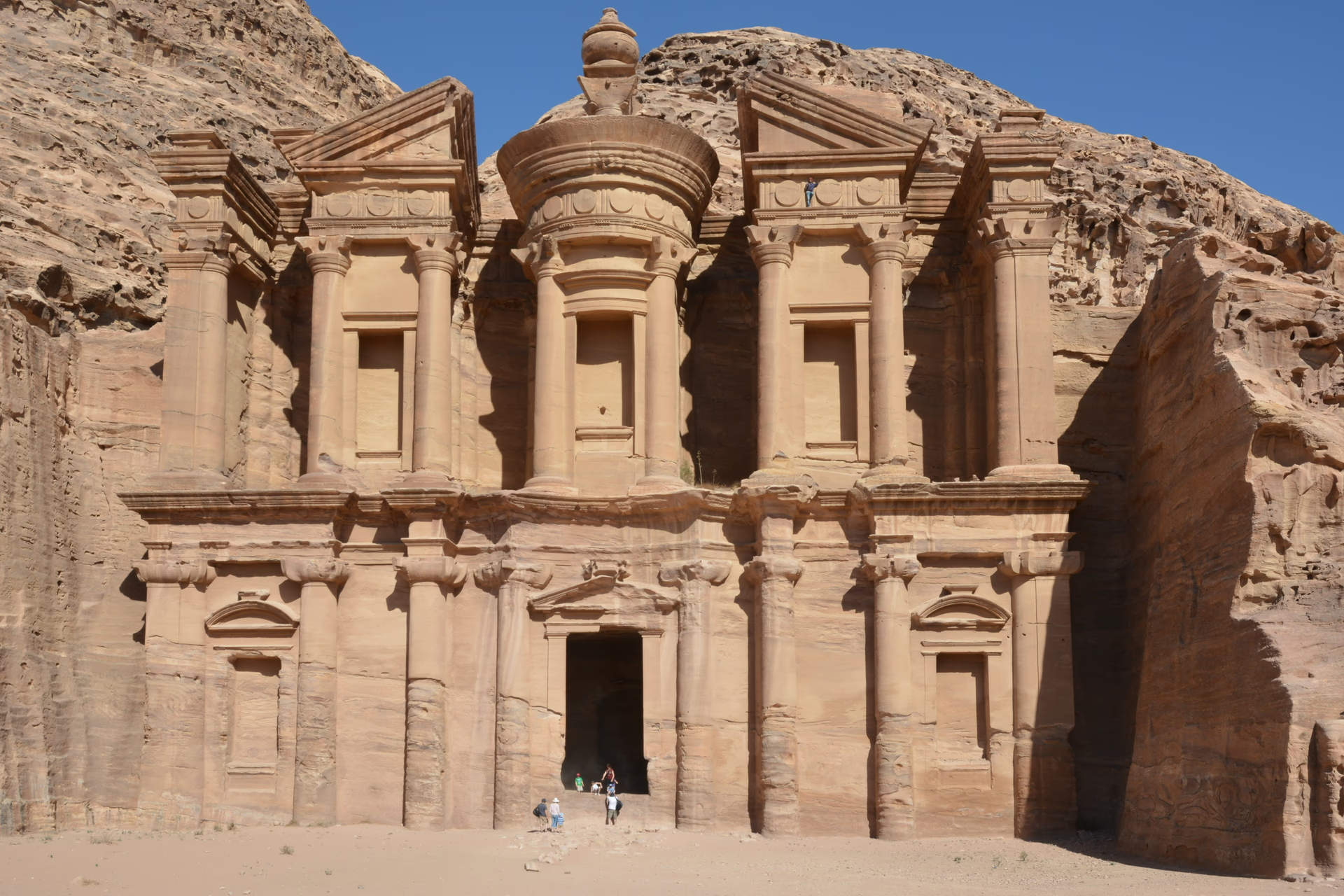
Petra: pick it if you came for the site
Pick Petra if the first motive is seeing the Treasury and the Monastery rather than unwinding. The site is a long walk before it is anywhere to stay: 1.2 km through the Siq before the rock opens onto the Treasury, about 8 km along the main trail from the visitor centre to Qasr al-Bint, and roughly 800 steps up if you want the Monastery.
What sets it apart from the other two is that its own schedule dictates yours. The gate opens at 06:00 and closes at 18:00 in summer, and runs 06:30 to 17:00 in winter, so a winter day gives you ten and a half hours, three of which go to the road if you attempt it in a single day. Neither Wadi Rum nor Aqaba runs on closing times.
The ticket pushes the same way. Jordanians pay 1 JOD, residents 10 JOD, and foreign visitors 50 JOD for one day, 55 for two and 60 for three. A second day therefore costs five extra dinars, less than any accounting of a second round trip. But the two-day ticket means nothing unless you sleep near the gate. Petra by Night is a separate 30 JOD, not covered by the Jordan Pass, and impossible anyway for anyone driving back to Amman that evening.
Wadi Musa, the town against the gate, is 36 km west of Maan city. Its supply on our side is the thinnest of the three: three places listed, and the town leans more to guest houses and small hotels than to chalets. We say that plainly, because knowing how thin the supply is beats finding out on arrival. Look through places to stay in Petra before you fix dates, and the site itself is covered in full in the Petra travel guide.
Spring and autumn are its seasons, for a practical reason: you are walking eight kilometres up a rock valley with almost no shade.
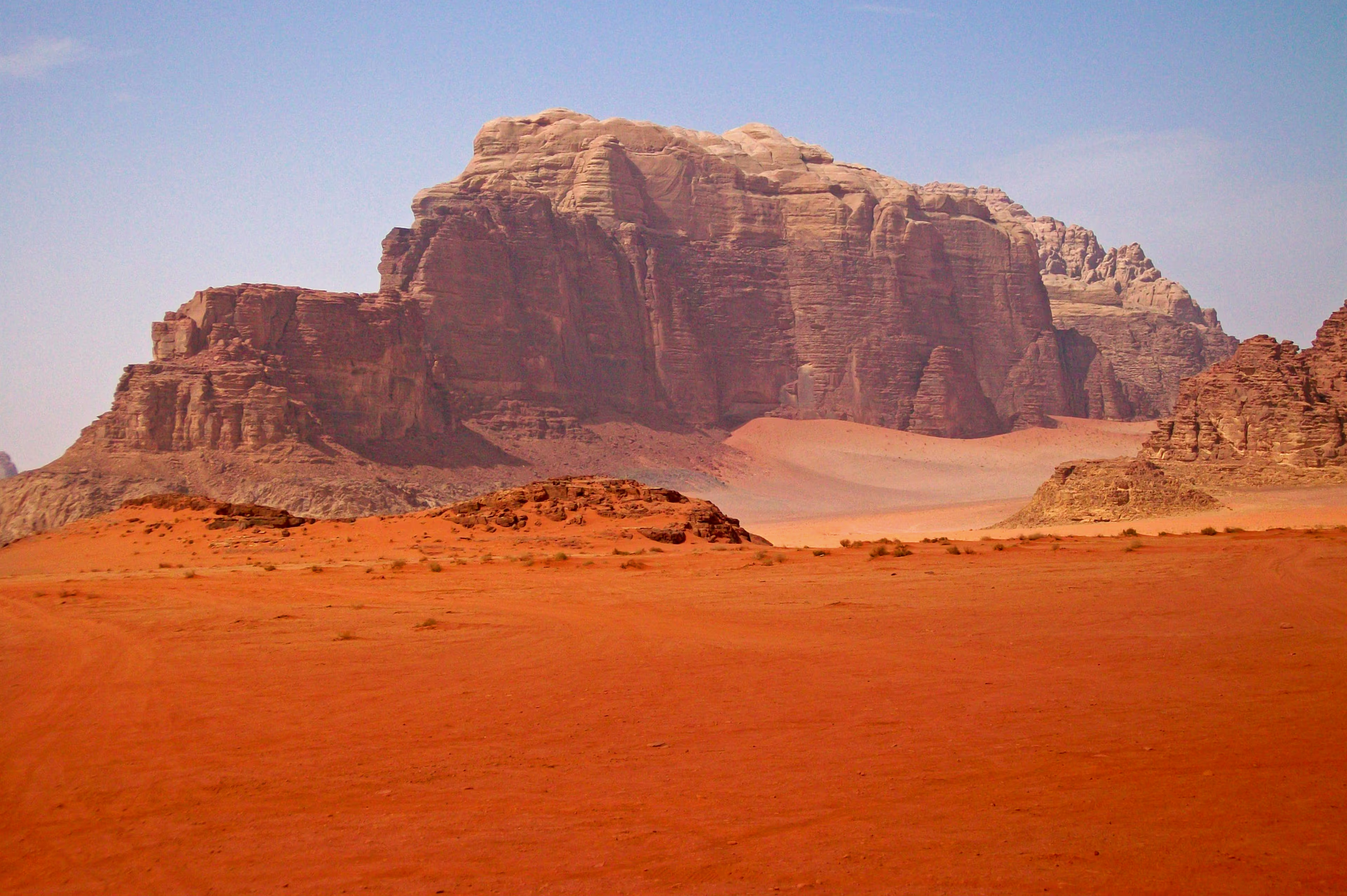
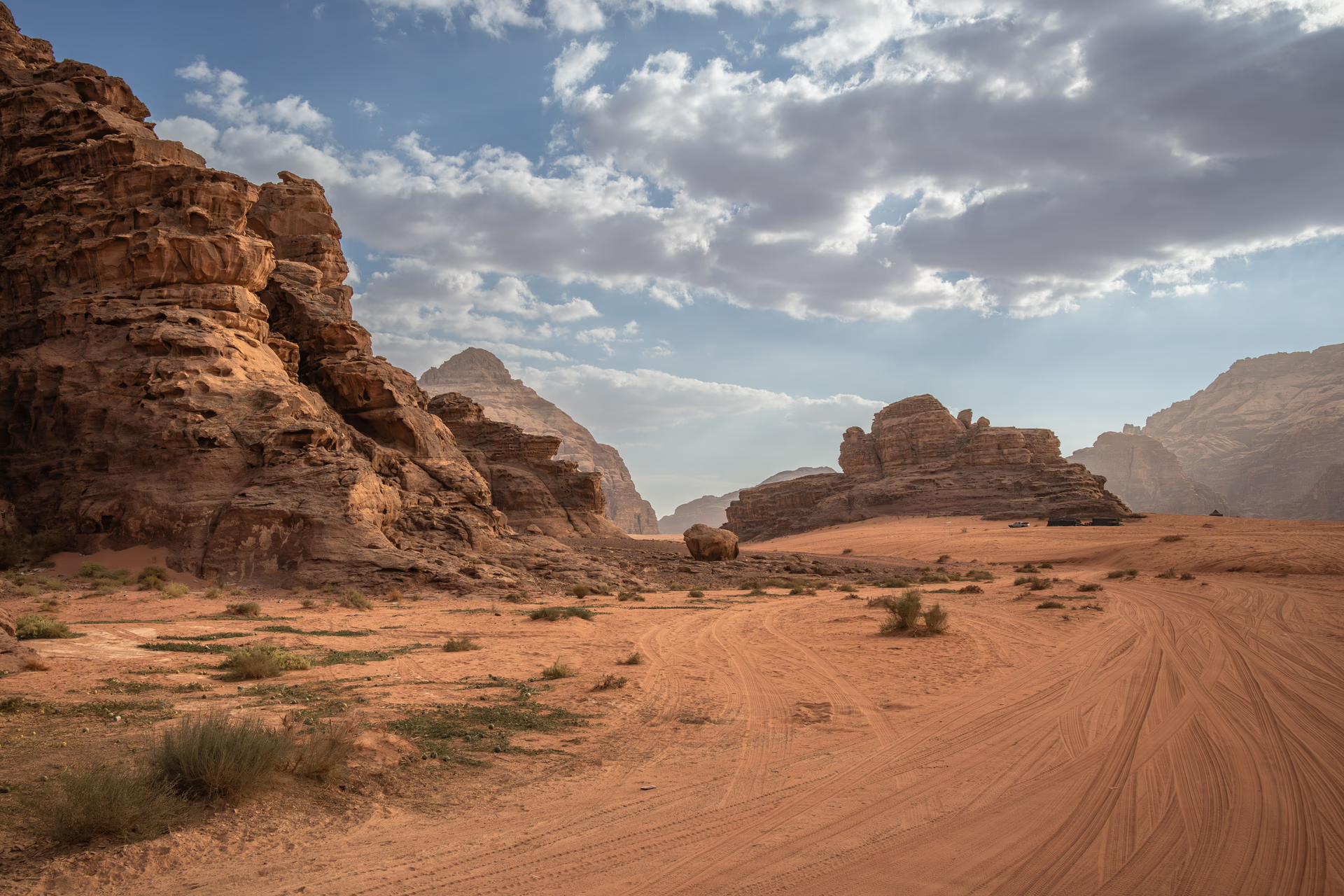
Wadi Rum: the camps are the trip
Pick Wadi Rum if you want where you sleep to be the event rather than a bed after a long day. Here is the thing to know before booking: Wadi Rum camps are not chalets. You sleep in a tent or a fixed room inside a Bedouin camp in a desert reserve on the UNESCO World Heritage list, not in a self-contained unit of your own with a pool and a garden. Camps vary a lot, from very basic with shared facilities to luxury bubble rooms you can watch the stars from, but they remain camps in a desert.
That is exactly what makes it the pick or the pass. Choose it over Petra if you want to stop moving instead of covering eight kilometres on foot, and over Aqaba if what you are after is silence rather than a waterfront. Rule it out if anyone in the group will not accept a shared bathroom or a night without air conditioning.
The seasonal trap here is real and catches plenty of people: desert nights are cold even when the days are hot, so warm clothes are a requirement in every season, summer included. Midday in Wadi Rum in summer is genuinely severe, and the hardest conditions you will meet anywhere in the south.
We list 67 camps and desert stays in Wadi Rum, by a wide margin the largest supply of the three areas. The highest-rated ones each carry more than a thousand reviews, with scores between 4.4 and 4.9 out of 5, a volume of feedback most accommodation in Jordan never accumulates. Browse the Wadi Rum camps we list to see the differences yourself, and if you want the detail on jeep tours and landmarks inside the desert, the Wadi Rum travel guide covers it so this post does not have to.
One last point that settles the choice: Wadi Rum is the cheapest thing to add to an itinerary, because it is on the way rather than off it. About two hours south of Petra and one hour north of Aqaba. A single night there costs you no day of the trip.
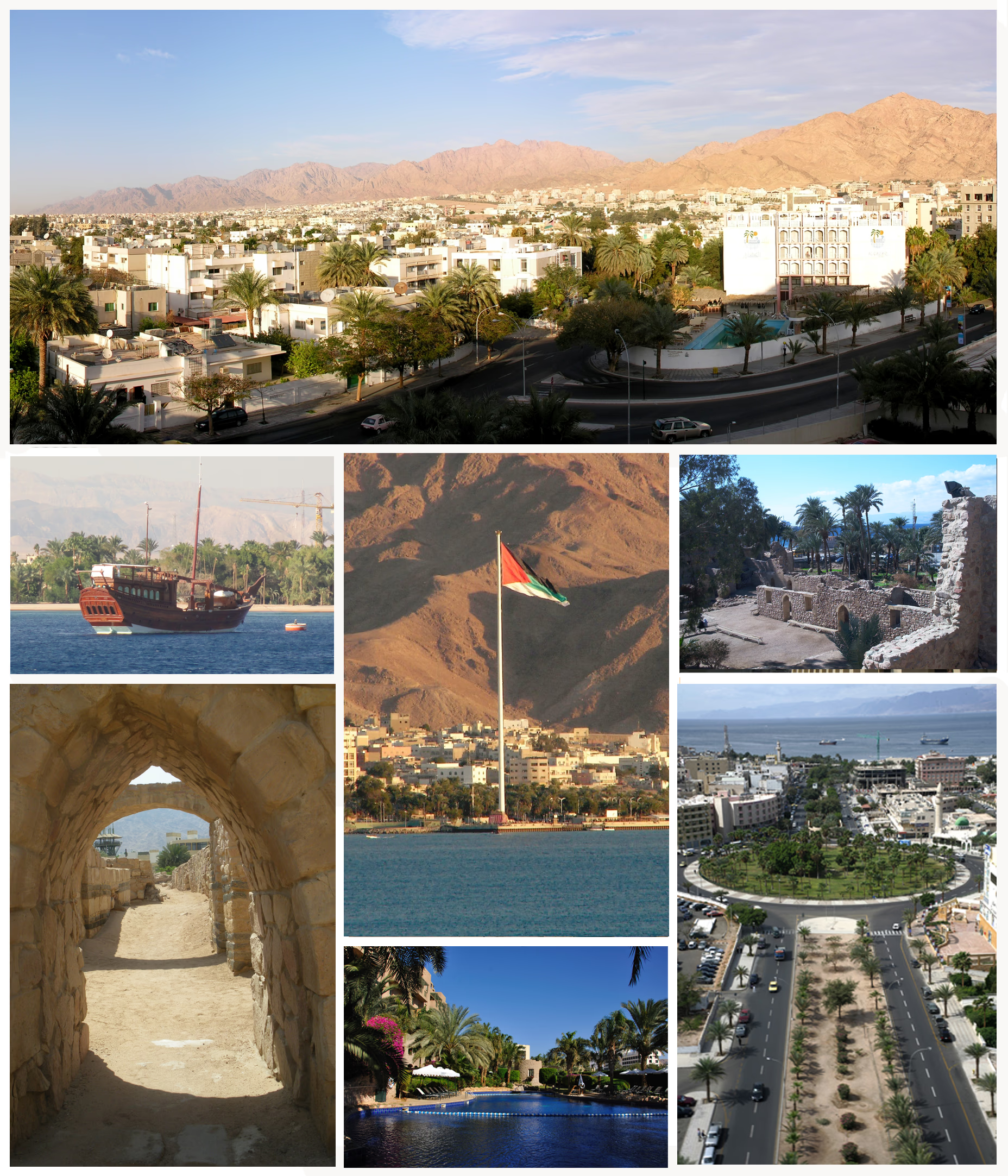
Aqaba: pick it to actually swim, and it is the winter answer
Pick Aqaba if swimming and snorkelling are the point. It is Jordan's only outlet to the sea, warm and sunny nearly year-round, with coral reefs close enough to shore that a simple mask is enough to see them. And it is specifically the right answer in winter: in December, Petra's gate shuts at 17:00 and Wadi Rum's nights get uncomfortably cold, while the water in Aqaba stays swimmable.
The structural difference from the other two is how much time it can absorb. Petra is spent in a day or two and then the programme ends; the desert is satisfied by a night or two before the days start repeating. Aqaba holds three nights or more without needing a schedule. That is why many people use it as the base for the whole trip: sleep by the sea and drive out to the desert for the day, an hour north.
We list 21 places in Aqaba, a far wider range than Petra and much closer to the familiar chalet-and-apartment shape, from gulf views to a few steps from the sand. The most-reviewed among them is approaching two thousand reviews at above 4.5 out of 5. Summers on the coast are hot, so swim early in the morning. Start with Aqaba chalets near the beach, and for dive sites and reef locations see the Aqaba travel guide.
The bottom line
The right question is usually not which one, but in what order. Amman to Petra to Wadi Rum to Aqaba is a single line you drive in one direction: about 235 km to Wadi Musa, then roughly two hours south to the desert, then an hour to the sea, with Petra itself about 100 to 120 km north of Aqaba. People who pick only one usually do so because they have three days and no more, or because the season decided for them.
The shape that works in four days: two days in Wadi Musa for the site, one night in a desert camp, and whatever is left by the sea. Flip the order in winter and start from Aqaba, the only one of the three whose day the season does not shorten. And if the drive is the thing you weigh first, how far Petra is from Amman breaks down both routes and the difference between them.
Whatever order you settle on, fix where you are sleeping before you fix the dates, because the supply is uneven across the three: 67 camps in the desert against three places at Petra's gate. Compare the areas from the areas page, then message the owner directly on WhatsApp from the listing, with no middleman and no added commission.
Common questions
- Petra or Wadi Rum: which is better?
- It depends on what you want out of the trip. Petra if seeing the archaeological site is the point, Wadi Rum if the night in the desert is the event. But they sit about two hours apart by road, so for most people the honest answer is both, in one order or the other.
- How many days does southern Jordan need?
- Four days is a sensible floor: two for Petra and Wadi Musa, one night in a desert camp, and a night or more in Aqaba. Three days works if you drop one of the three. Two days means more driving than looking.
- Can I visit all three in one trip?
- Yes, and the geography makes it easy. Amman to Petra (about 235 km), then Wadi Rum, then Aqaba is a single line with no backtracking, because Wadi Rum sits between Petra and Aqaba, and Petra itself is roughly 100 to 120 km north of Aqaba.
- When is the best time for southern Jordan?
- Spring and autumn suit all three. In winter the balance tips to Aqaba, because Petra's gate closes at 17:00 and desert nights turn cold. In summer, midday in Wadi Rum is the hardest part of the whole trip.
- Is a Wadi Rum stay a chalet?
- No. Staying in Wadi Rum means a Bedouin camp, not a self-contained unit with a pool. Camps range from very basic to luxury, but they are still camps. If you want a chalet with a private pool, you will find it in Aqaba or Wadi Musa rather than the desert.